
Music
Inside Hulaween’s Wild and Wonderful World

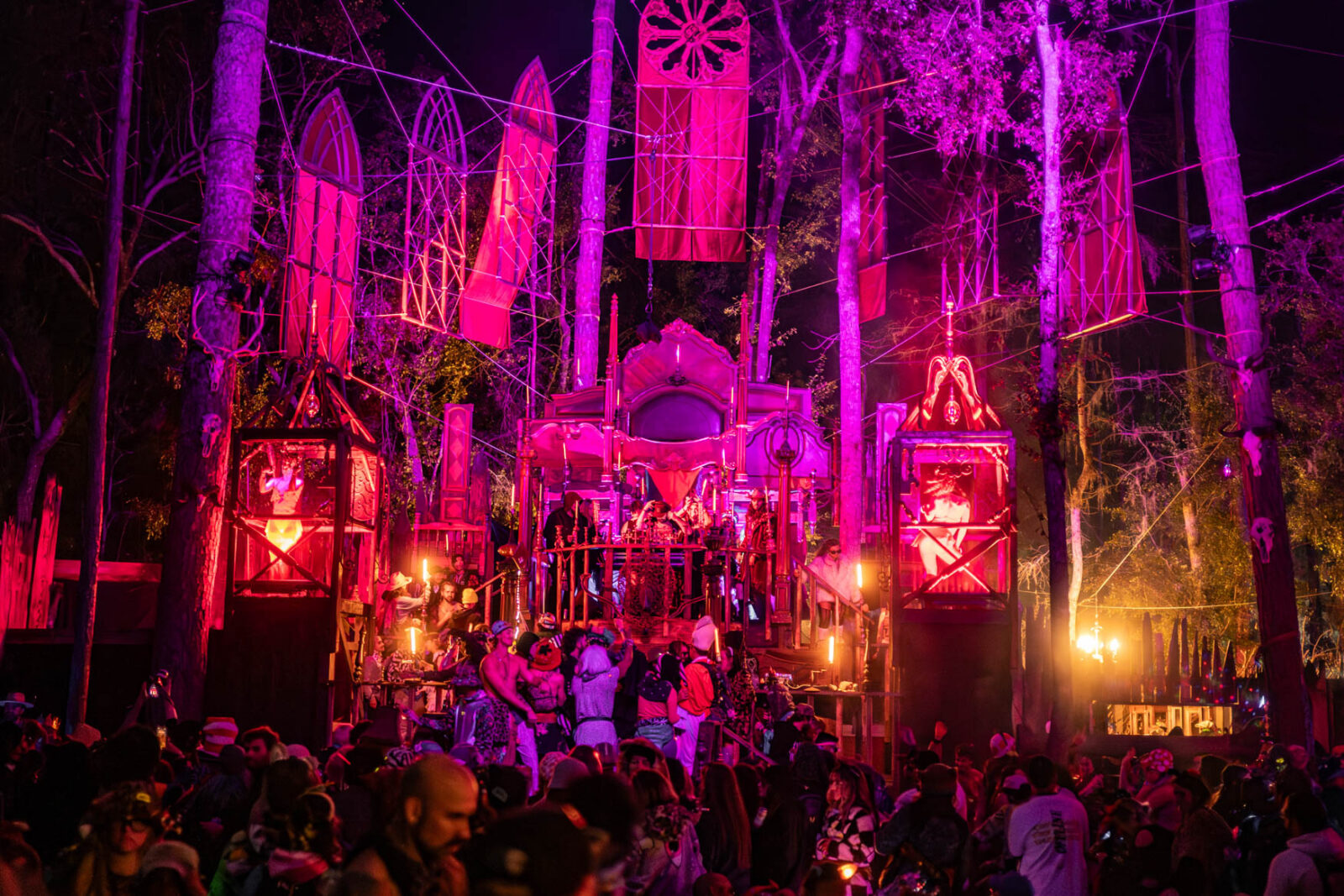
Beyond the Music, Founder Michael Berg Reveals How Hulaween Built a World Where the Unexpected Becomes the Main Attraction.
August 7th, 2026
There is a moment at Suwannee Hulaween when the schedule stops mattering.
Maybe it happens beneath the glowing trees of Spirit Lake long after sunset. Maybe it arrives during a set you had absolutely no intention of seeing. Perhaps it starts with a stranger wandering into your campsite, a silent disco that somehow materialized in the woods or a musician unexpectedly climbing behind the decks several hours after they were supposed to be done for the night.
That unpredictability has become part of the mythology surrounding Hulaween.
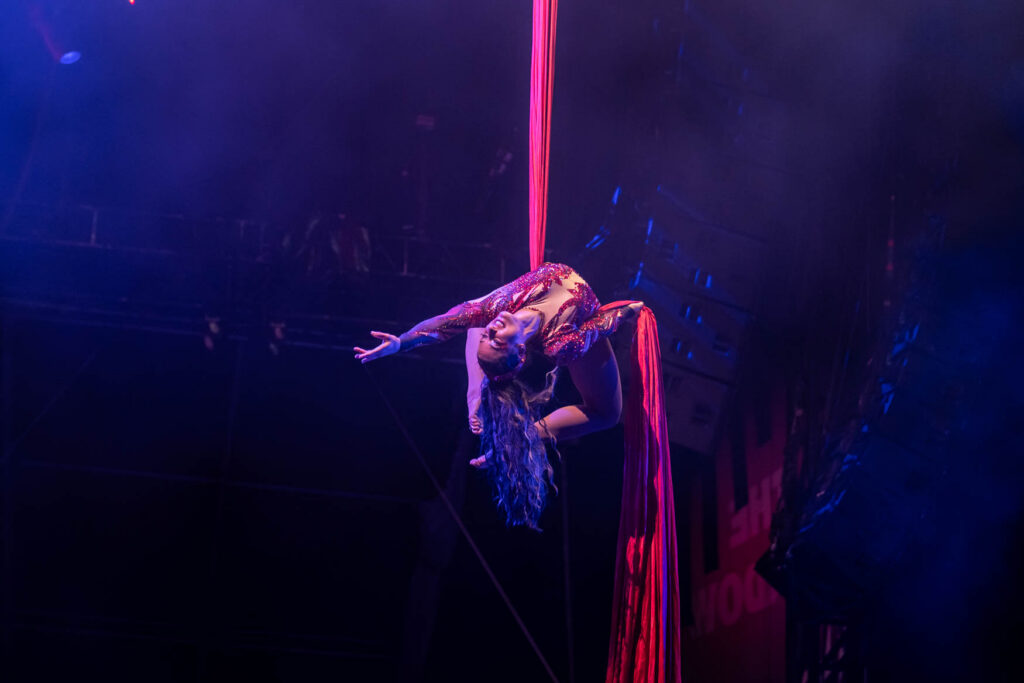
For four days, the Spirit of the Suwannee Music Park transforms from a sprawling North Florida campground into something considerably harder to define. There are concerts, certainly. There are also massive art installations, elaborate costumes, hidden spaces, spontaneous performances, campground communities and enough flashing lights after dark to make an alien invasion seem surprisingly plausible.
For festival co-founder Michael Berg, that blurring of music, art, place and community is precisely what makes Hulaween different.
“It’s definitely immersive and it’s definitely something that feels special,” Berg said.
Walking anonymously through Spirit Lake during the festival, Berg and his team have occasionally stopped simply to listen to the reactions around them.
The soundtrack is not always coming from a stage.
Sometimes it is the collective chorus of thousands of people whispering, laughing, gasping and offering the occasional “oooh” or “ahhh” as another strange corner of Spirit Lake reveals itself.
Those reactions have helped Berg recognize something unusual about the experience.
Often, people do not realize they are living through an important moment until years later. Life has a habit of revealing significance through hindsight. A difficult period becomes obvious only once it is behind us. A perfect night becomes legendary after enough time has passed.
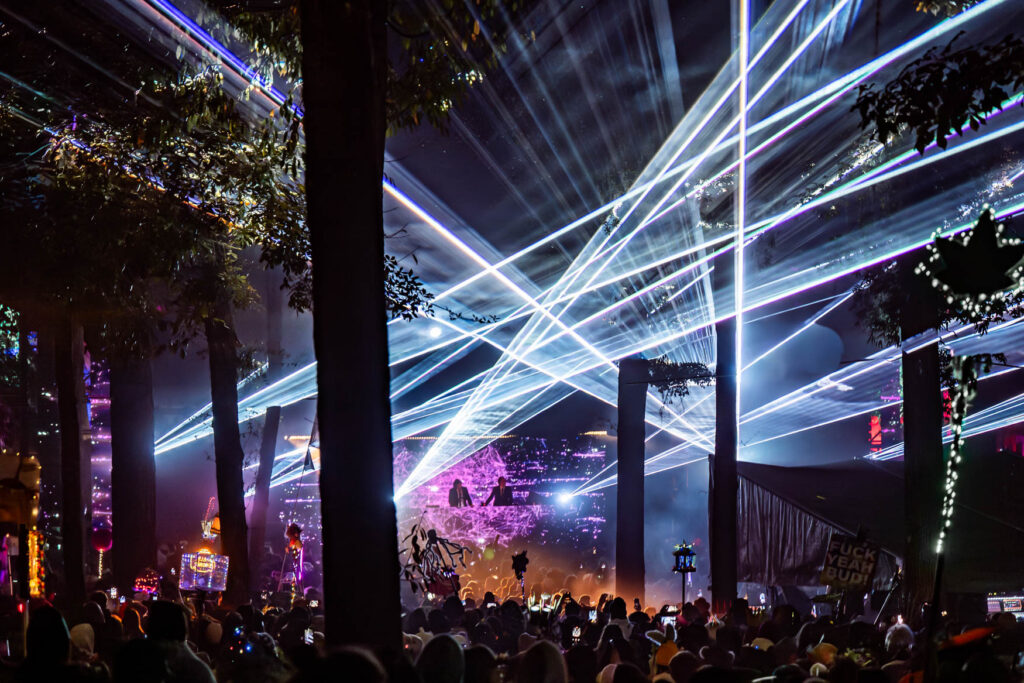
Spirit Lake appears capable of speeding up that realization.
“It’s the kind of thing that people realize they’re seeing something special while it’s happening,” Berg explained.
That may be the closest anyone gets to explaining Hulaween without simply handing someone a wristband and pointing them toward the woods.
Four Pieces of the Hulaween Puzzle
Berg initially describes Hulaween as a three-part Venn diagram before quickly correcting himself.
Actually, there are four.
Community.
Art.
Music.
And the Spirit of the Suwannee Music Park itself.
The park is not merely the place Hulaween happens. For many longtime attendees, it has become another headliner.
Spanish moss hangs over sprawling trees. Campsites stretch far beyond the stages. Trails disappear into woods illuminated by increasingly strange creations as darkness settles in. The nearby Suwannee River gives the property another personality entirely.
Berg has even heard industry friends describe an almost spiritual energy attached to the property.
Whether guests interpret that connection historically, spiritually or simply as the natural consequence of spending several days underneath enormous trees without staring at office walls is entirely up to them.
What matters is that people feel it.
Then comes the community.
Hulaween is approaching the point where generations of attendees are beginning to overlap. Some guests have made the pilgrimage every year. Others attended religiously for four or five editions before life, children, careers or changing musical tastes pulled them elsewhere.
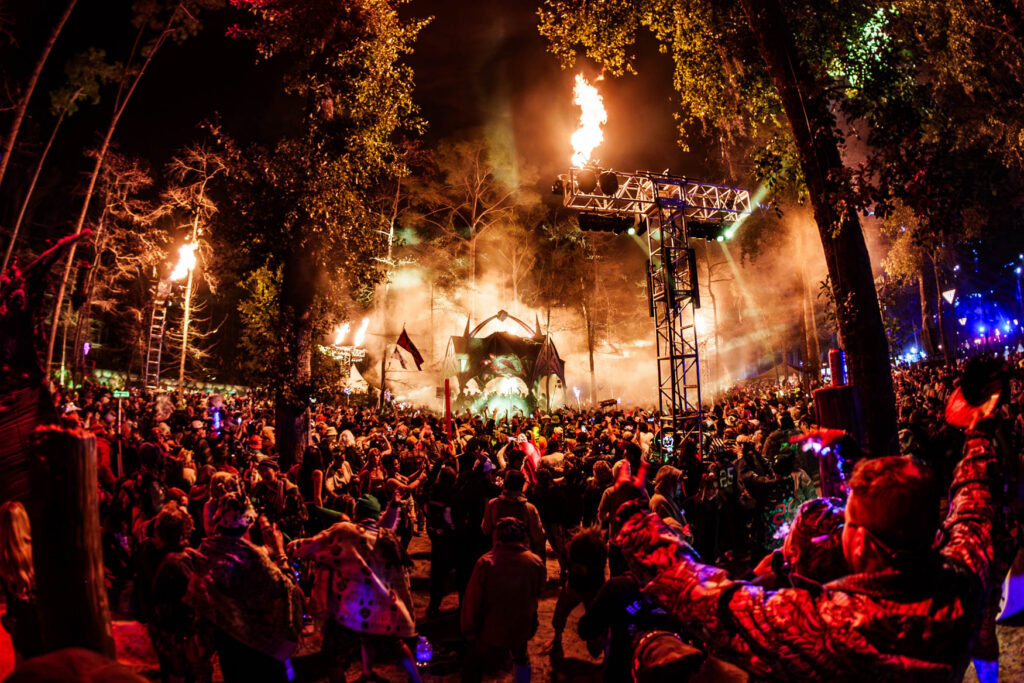
Photo by Yvonne Rudashi
Meanwhile, younger fans who grew up hearing stories from older siblings or friends are finally arriving for their first Hulaween.
That evolution can occasionally create tension.
Longtime festivalgoers naturally become protective of something they feel belongs to them. New attendees bring different musical interests, expectations and energy.
Berg understands both sides.
“We never like to lose a fan,” he said. “But the community is growing.”
Growth, however, does not mean abandoning the philosophy that helped establish Hulaween.
“Whatever kind of music you like, whatever your religion is, your skin color is, your sexual preference, how you identify in any way, shape or form, we are an inclusive community,” Berg said.
That principle, he added, has existed since the festival was conceived.
Building Musical Journeys Instead of Booking Names
Look at a Hulaween lineup poster and it can initially resemble several different festivals accidentally printed on the same piece of paper.
That is intentional.
Pretty Lights can coexist with Excision. Warren Haynes can share a weekend with electronic producers. The String Cheese Incident can live alongside house, bass, funk, indie rock, Americana and psychedelic acts without Hulaween behaving as though any of them crashed the wrong party.
Berg does not view the lineup as one enormous collection of names.
He views it as pathways.
When the festival team constructs the schedule, the goal is to create an uninterrupted musical journey for different kinds of listeners.
A jam fan should be able to move through the day finding music that speaks to them. So should someone primarily interested in house. Bass fans can follow another route. Funk, indie rock and Americana devotees should be able to construct their own adventure.
Perhaps they bounce between stages.
Perhaps they barely move at all.
Either way, Berg wants each musical tribe to feel as though the festival was partially built for them.
The philosophy again comes back to his favorite visual metaphor: the Venn diagram.
Artists sitting near its center naturally connect several portions of the audience. Pretty Lights, for example, can occupy territory between the jam and electronic communities.
Other artists deliberately stretch toward the edges.
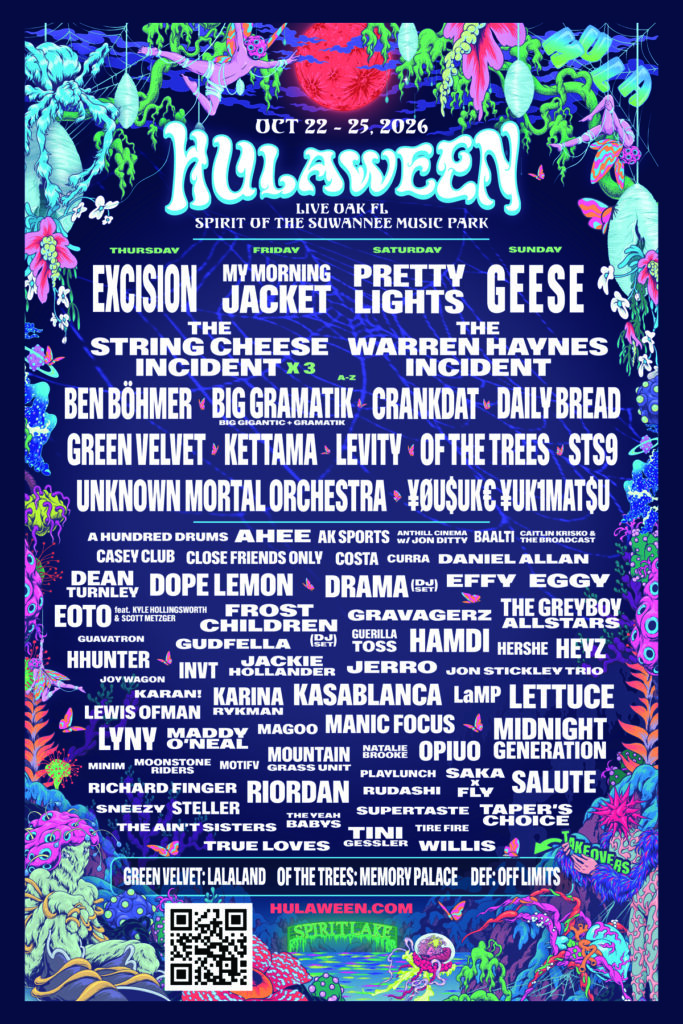
Excision takes Hulaween deeper into heavy bass territory. Warren Haynes reaches toward the jam world.
The balancing act is figuring out how far the festival can explore without making large portions of the audience feel disconnected from everything happening around them.
“You try to put as much of it as close to the middle as possible,” Berg said.
Still, nobody expects every attendee to fall in love with every artist.
“I think people like what they like,” Berg said.
The more interesting possibility is what happens when someone accidentally likes something they never expected to.
The Sets Nobody Planned to See
Ask Hulaween veterans about their favorite memories and many answers have little to do with the artist they originally bought a ticket to see.
That may be one of the festival’s greatest strengths.
A person wanders into Spirit Lake and discovers a DJ they have never heard.
A late-night gathering quietly turns into a performance.
Two artists happen to be friends and suddenly decide playing together sounds considerably more fun than going to bed.
Sometimes Hulaween manufactures that magic.
Sometimes even the organizers are spectators.
Berg still remembers a Spirit Lake pop-up featuring Skrillex, Chris Lake and Bonobo.
The three artists had never performed together in that configuration.
Even the person helping curate the festival found himself standing there thinking the same thing as everybody else.
“This is fucking insane,” Berg recalled.
Those words may not belong in every corporate festival brochure.
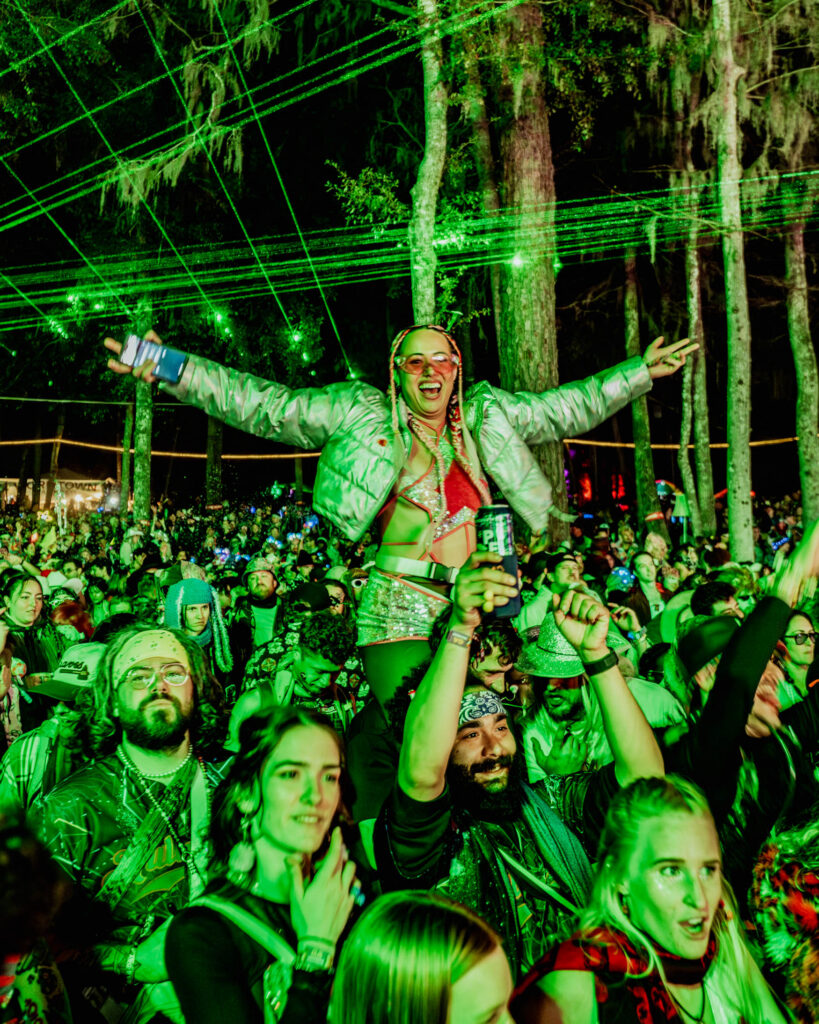
At Hulaween, they sound almost like a mission statement.
The Off Limits stage has created additional opportunities for those unexpected collisions. Introduced as a 360-degree experience inside Spirit Lake, it has become fertile territory for unusual combinations.
Last year, Disco Lines and Tape B joined forces for an impromptu-style collaboration that merged house and bass into something belonging entirely to neither.
Other collaborations require considerably more planning.
Berg pointed toward specially curated performances such as the Warren Haynes Incident and the previous Bob Weir Incident, where organizers intentionally brought musicians together to create something audiences might never see reproduced.
Those are the sets built to become stories.
But Hulaween’s most charming moments can also occur without anybody in an office planning them.
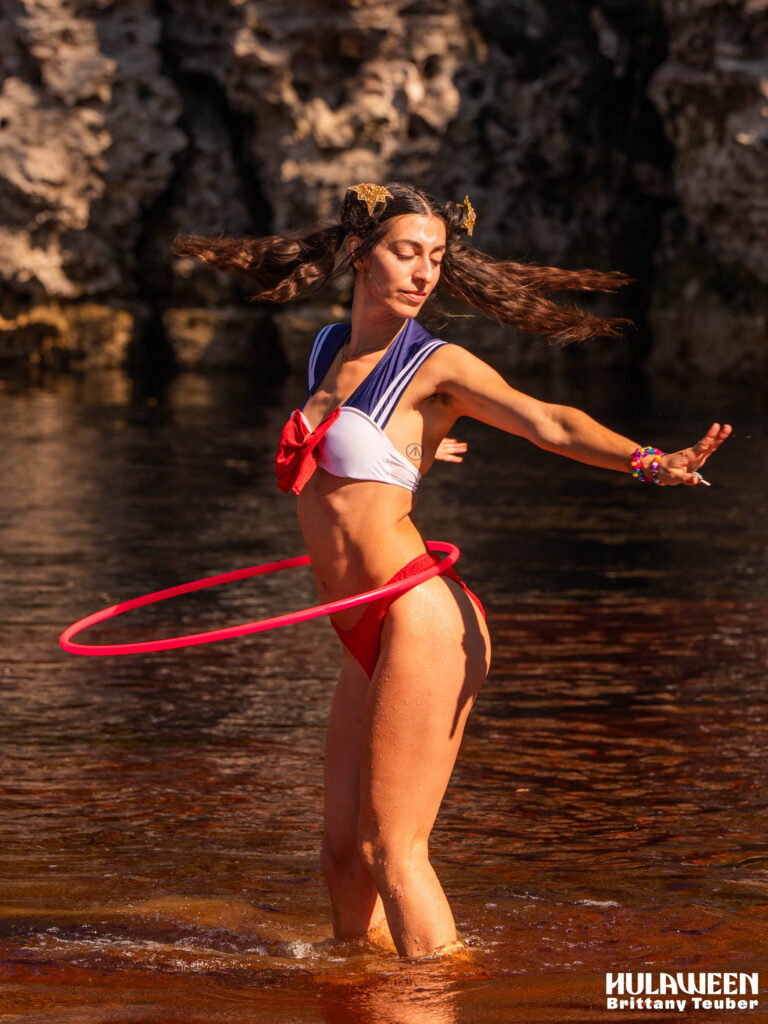
Campgrounds develop their own ecosystems. Attendees haul surprisingly sophisticated sound equipment into the park. Silent discos appear. Local Florida performers show up. DJs, rappers and occasionally artists already appearing on the official lineup drift into unofficial gatherings.
Festival organizers occasionally hear about one and wander over themselves.
Partly because they want to experience it.
Partly because somebody still has to make sure everyone remembers the campground has neighbors.
Renegade culture only works, Berg noted, if the festival remains welcome at Suwannee and within the surrounding community.
That tension between controlled production and creative chaos gives Hulaween some of what Berg describes as a “Burning Man-esque” quality.
The festival builds the framework.
The audience finishes decorating it.
At Hulaween, Sometimes You Become the Decoration
Festival fashion has escalated dramatically over the past decade, but Hulaween attendees occasionally appear to be competing in a different sport.
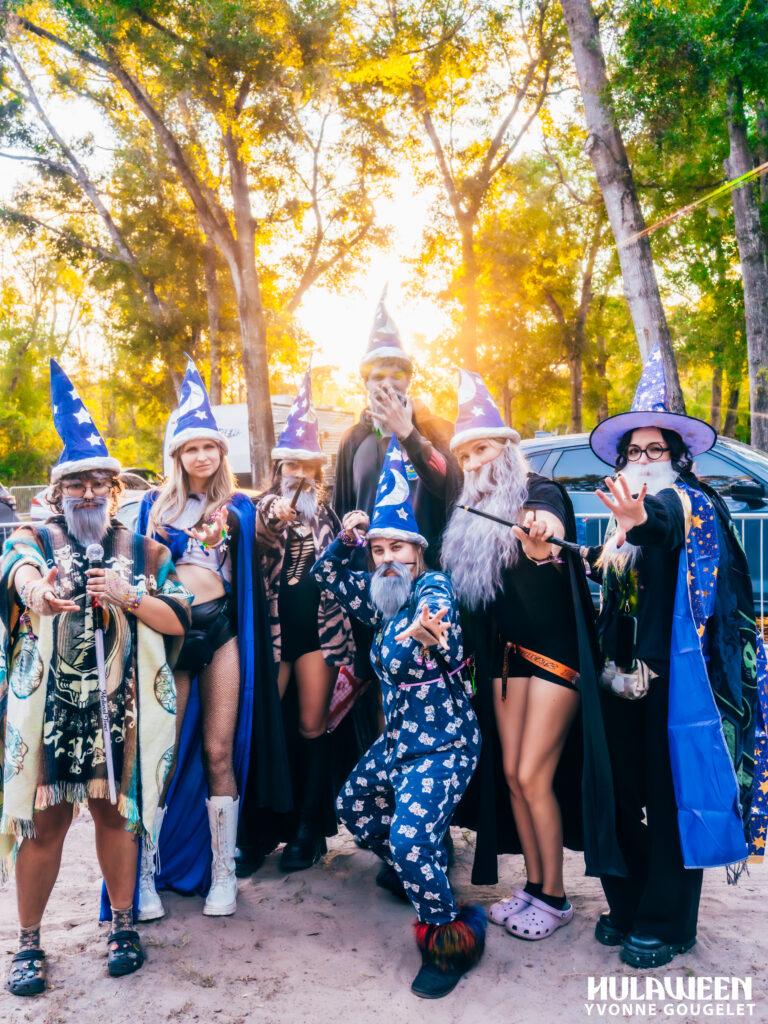
Costumes can involve full-body paint, handcrafted headpieces, glowing accessories and outfits sophisticated enough that wearing shorts and a band T-shirt begins to feel wildly underdressed.
That participation is increasingly important.
“The days of just throwing up a stage in a field and expecting that that’s enough” are disappearing, Berg said.
Modern festival audiences want more than observation.
They want involvement.
Hulaween responded by expanding its themed costume nights, encouraging attendees to interpret the festival visually instead of simply walking through somebody else’s creation.
“They want to be the art,” Berg said.
Some take that assignment extremely seriously.
Berg remembers one campsite from the festival’s earlier years that remains nearly impossible to top.
Organizers were roaming the grounds judging a campsite and group costume competition, with VIP upgrades awaiting the winners.
Eventually they stumbled across something considerably more elaborate than expected.
A wedding chapel.
Inside the campground.
Complete with a couple apparently getting married and an entire group dressed for what Berg describes as a full hippie wedding scene.
There was little debate.
They had found their winners.
Organizers approached the couple and prepared to remove their general admission wristbands and replace them with VIP credentials.
One minor complication emerged.
They did not have wristbands.
The entire group had apparently snuck into the festival.
They had somehow bypassed admission and then responded by constructing a chapel and staging a wedding elaborate enough to win Hulaween’s campground contest.
Berg and company surrendered to the absurdity.
They gave them the VIP wristbands anyway.
Fair was fair.
Making Hulaween More Affordable When Everything Costs More
One of the least whimsical parts of producing an immersive four-day festival involves paying for it.
Nearly every component has become more expensive.
Artists cost more.
Transportation costs more.
Production costs more.
Fencing costs more.
Portable toilets, trailers, staffing and infrastructure all continue moving in the same unpleasant direction.
Festival ticket prices across the industry have followed.
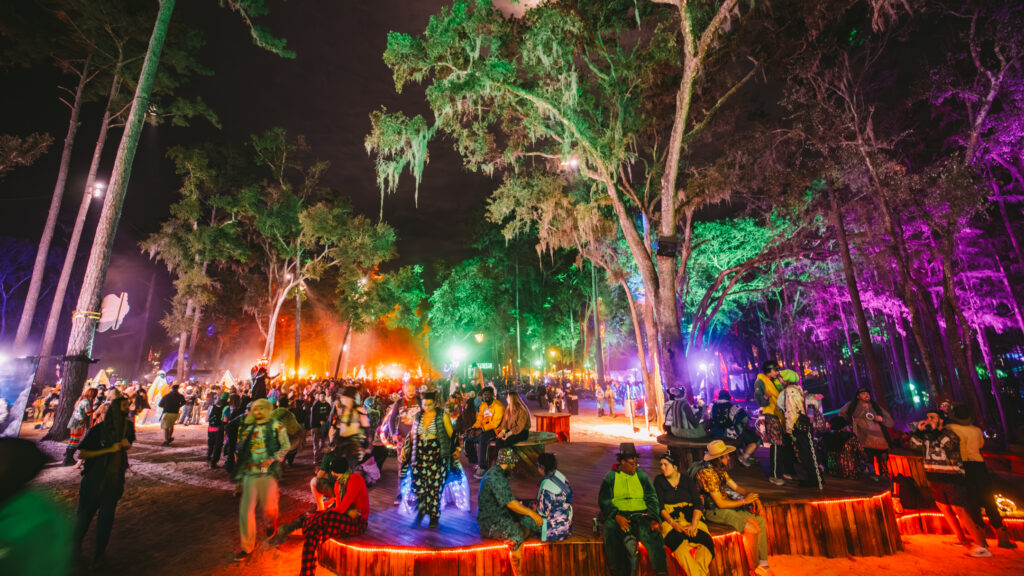
Hula 25′ Photo by Patrick Hughes
Hulaween decided to move the other way.
Berg said the festival closely monitors social media responses, direct messages and fan feedback. One recurring criticism stood out: upgrades seemed increasingly directed toward VIP customers while general admission guests continued carrying much of the festival’s cultural backbone.
It was not an entirely unfair criticism.
VIP tickets generate additional revenue, allowing producers to reinvest in those experiences.
But Berg also understood what general admission attendees were saying.
So Hulaween began looking for savings elsewhere.
Vendor contracts were renegotiated. Departmental budgets were adjusted. Staffing structures were reconsidered.
Eventually enough savings accumulated to reduce general admission ticket prices by $100 compared with the previous year’s corresponding pricing.
Instead of absorbing those savings into the festival’s bottom line, organizers pushed them back toward attendees.
For one person, $100 matters.
For a couple buying two tickets, $200 starts paying for something tangible.
“That’s drinking money or costume money or your tent money,” Berg joked.
More importantly, it lowers the barrier preventing someone from returning to a community they may already feel belongs to them.
That balance is complicated.
Nobody can realistically expect a four-day, five-stage Hulaween to cost what the festival did during its early years when the event was smaller, artists charged less and practically everything required to produce a major festival was cheaper.
But Berg does not want Hulaween to become something longtime fans can only admire from outside the gates.
“We’re doing the best we can to find the balance between what we’re dealing with on our economy of scale and what the barrier of entry is to not feel like you’re priced out of something that you belong at.”
Leave Room for the Unexpected
Twenty years from now, somebody who attended Hulaween 2026 will probably struggle to explain why one particular moment still lives so clearly in their memory.
Maybe they slipped away to the Blackwater River and found white sand beneath their feet while music appeared nearby.
Maybe Spirit Lake completely rearranged their brain for an evening.
Maybe they found a hidden room.
Maybe they watched Warren Haynes and company create something that will never quite exist in the same form again.
Perhaps their favorite memory will involve absolutely none of the names printed in giant letters on the poster.
That possibility appears to delight Berg.
Hulaween has survived because its identity was never completely attached to any single artist.
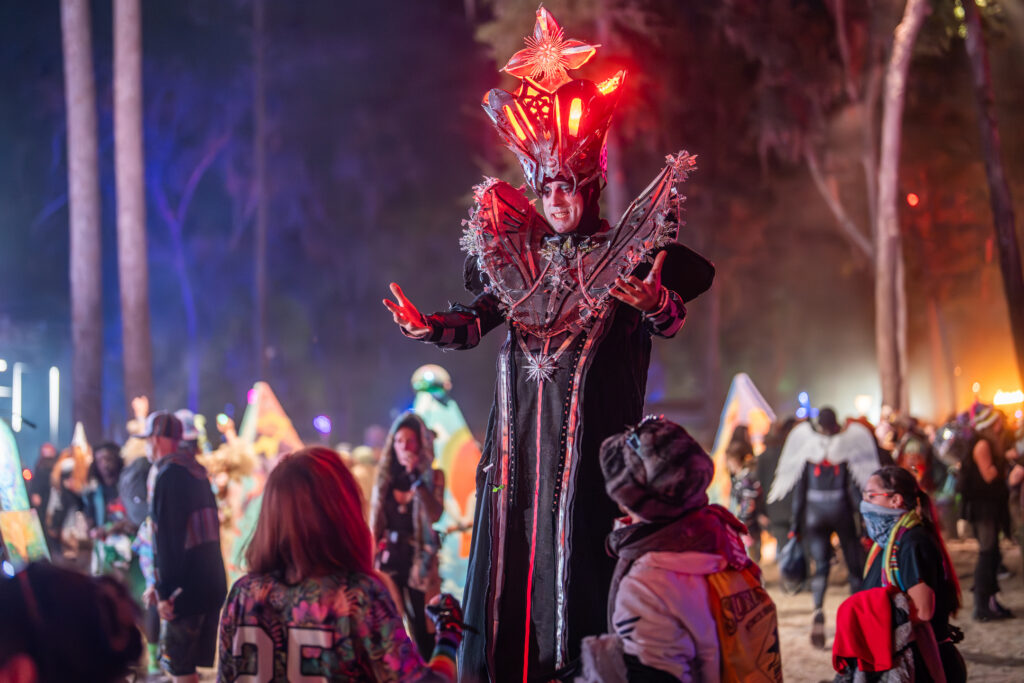
The music matters enormously.
It simply shares the spotlight.
The park matters.
The art matters.
The costumes matter.
The person camped beside you who lends you something at 2 a.m. matters.
The ridiculous conversation with a stranger beneath a glowing tree matters.
And sometimes the artist you wandered toward because you had 45 minutes to kill becomes the one you listen to repeatedly on the drive home.
If Berg could impose one unwritten rule on every Hulaween attendee, it would have nothing to do with shower schedules, campsite etiquette or learning how to pace yourself across four exceptionally long days.
He would ask people to remain open.
Open to other music.
Open to other people.
Open to experiences that may initially seem unfamiliar.
“Be welcoming, inclusive and live with an open mind,” Berg said.
That philosophy may explain why Hulaween has endured while so many festivals have disappeared.
The organizers can book the artists.
They can build Spirit Lake.
They can construct stages, hang lights, install artwork and spend months arranging thousands of logistical pieces.
But eventually the gates open.
The attendees arrive.
And Hulaween becomes theirs.
Which raises one final important question.
What if extraterrestrials landed at the Spirit of the Suwannee Music Park during Hulaween, wandered into Spirit Lake, encountered thousands of costumed humans beneath lasers and then stumbled across three nights of The String Cheese Incident?
Would they realize they had arrived on Earth?
Or simply assume this was normal and purchase four-day passes?
Berg considered the possibilities.
“I think they would find themselves right at home.”
At Hulaween, they probably would.









Despite Some Technical Difficulties, Toto “Hold the Line” And Deliver A Night of Timeless Melodies That Prove the ’80s Are Forever – Photos and Review of the Toto, Christopher Cross, and The Romantics Concert at the iThink Financial Amphitheater in West Palm Beach, FL

“Sing a Song All Night Long”: R&B Soul Legends Set the Guitar Hotel On Fire With A Hit-Filled Night of Spectacular Music – Photos and Review of the Lionel Richie and Earth, Wind & Fire Concert at the Seminole Hard Rock Live in Hollywood, FL

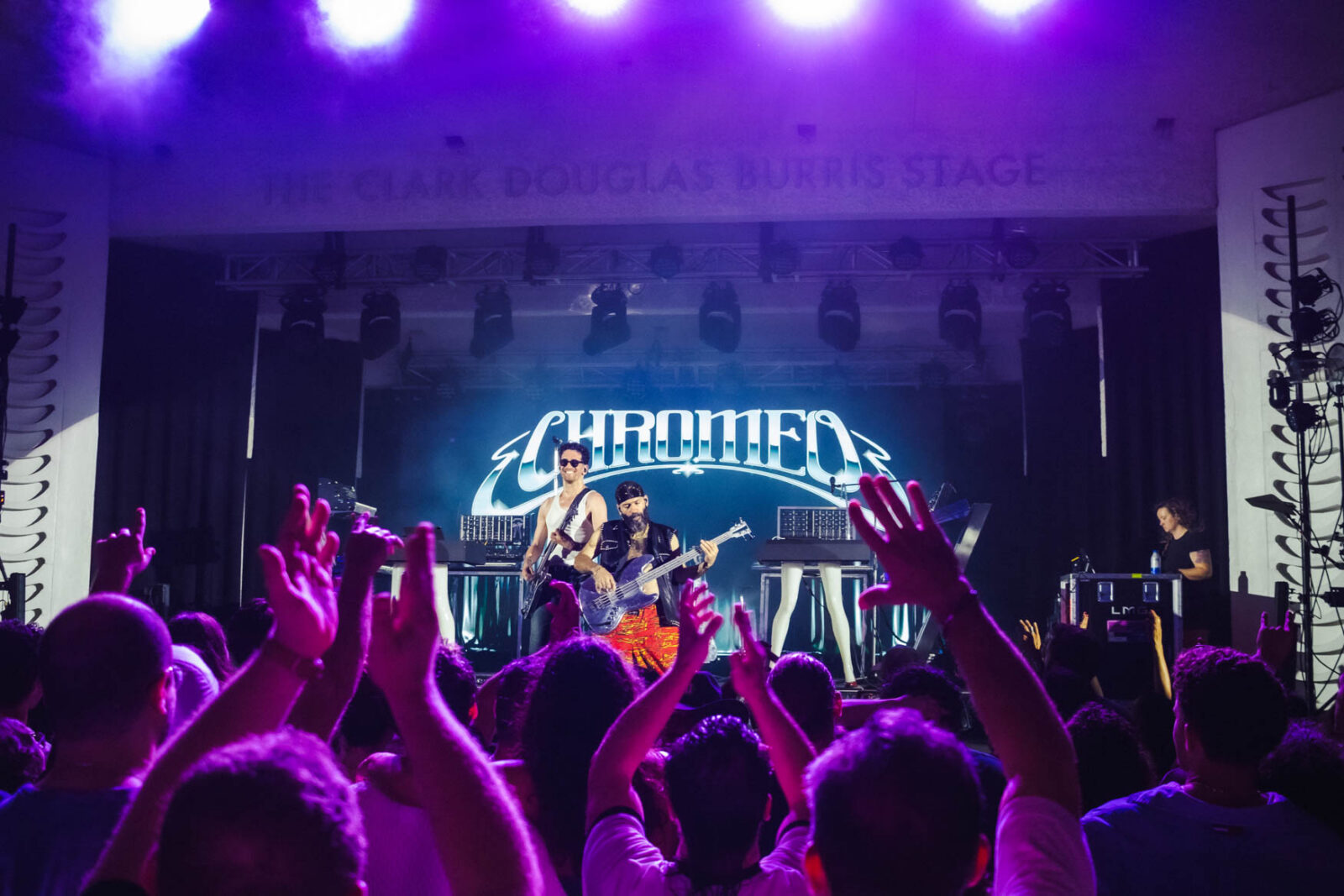
Chromeo Brings Synths, Swagger and Nonstop Energy to Miami Beach’s Most Intimate Stage.
(more…)

Southern Rock Royalty Meet Rising Stars For A Commanding West Palm Beach Performance – Photos and Review of the Lynyrd Skynyrd Concert at the iThink Financial Amphitheater in West Palm Beach, FL
Men at Work and Toad the Wet Sprocket Celebrate Hits That Help Define the ’80s and ’90s. Shonen Knife opens.
Kaseya Center Erupts as J. Cole Blends Mixtape Nostalgia, Arena Anthems and Pure Showmanship. (more…)

The Midwest’s Favorite Sons Bring The Spirit of Illinois to South Florida on Opening Night of the “Windy Cities Tour” – Photos and Review of the Styx and Chicago Concert at the iThink Financial Amphitheater in West Palm Beach, FL
Early Aughts Nostalgia Reigns Supreme as “Drops of Jupiter” Brings Waves of Joy to South Florida – Photos and Review of the Train, Barenaked Ladies and Matt Nathanson Concert at the iThink Financial Amphitheater in West Palm Beach, FL

Inside Hulaween’s Wild and Wonderful World

Viva Azteca Blends Adventure, Relaxation and Authentic Mexican Hospitality

West Palm Beach Beer Fest Returns


-
 Music4 weeks ago
Styx and Chicago Launch “Windy Cities” Tour with a Thunderous West Palm Beach Opener
-
Attractions4 weeks ago
Finding the Pause Button in Brickell
-
Sports4 weeks ago
Back Off, Heat: VentaPak Brings the Breeze
-
Travel3 weeks ago
Brightline Review: SMART Versus PREMIUM Worth Comparing
-
Restaurants4 weeks ago
RA Sushi Turns Dinner into a Full-Blown Night Out
-
Restaurants3 weeks ago
South Florida’s Passport to Montreal Flavor
-
Entertainment4 weeks ago
Florida Supercon Was a Multiverse of Cosplay and Chaos
-
Events4 weeks ago
Wing Lovers Flocked to Boca for Flavorful Showdown